
ELVIS AND HIS IMPACT ON PCC CANOES
 

By Mikaele Foley
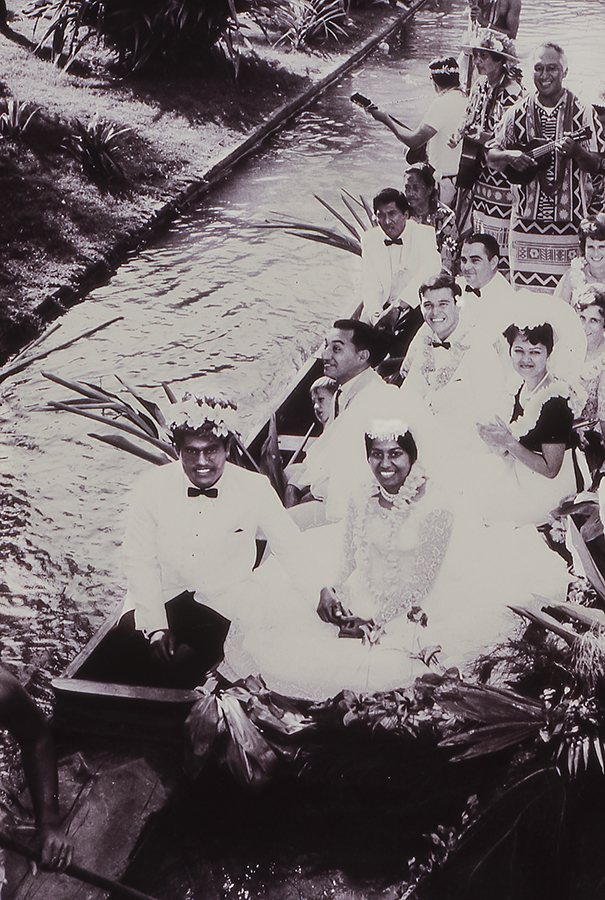
Magalei Wedding Party – 1968

 Elvis Presley, the 1960s king of rock and roll, deserves some recognition for helping the Polynesian Cultural Center’s focus on canoes in its earliest years. 

 First, for example, in 1961 — about the time labor missionaries started to build the PCC — Elvis brought out Blue Hawaii, a very popular movie co-starring Joan Blackham, who played the part of a local beauty from Kaua’i.  

As their romance develops toward the end of the film, the couple appear on decorated canoe floating down a waterway at what was then the CocoPalms Resort near Kapa‘a, Kaua‘i. (The Coco Palms was destroyed in 1992 during Hurricane ‘Iniki.) 

 That scene set the “gold standard for let’s get engaged on a Polynesian canoe.” For example, I remember when Japanese national TV brought Sāmoan sumotori Konishiki (Saleva‘a Atisinoe from Wai‘anae) and his bride to the Center in the 1980s to videotape them on a wedding party-canoe. 

 We’ll come back to this theme in a moment, but second, Presley returned to Hawaii in 1965 to film part of his third island-based movie, Paradise Hawaiian Style, which came out the following year. According to PCC old-timers who were there and appeared in background shots, “the king” spent about a month using the PCC and student employees, who were singing and dancing, serenading them, as he and his movie-girlfriend cruised past each village along our lagoon. 

 At the end of the PCC segment, all the villagers rush Elvis through the tunnel to the stage at Hale Aloha (now the luau) theater where he is suddenly the featured entertainer, surrounded by the entire night show cast (but performing during the daytime). He sings Bula Laie (but in English as Drums of the Islands). 

 It’s hard to measure exactly how much impact Presley’s publicity generated, but old-timers say attendance started improving about that time.Interestingly enough, as PCC popularity grew, so too did demand among people who wanted to get engaged or celebrate their weddings aboard one of our canoes. 

 The earliest PCC wedding party canoe? On April 27, 1968, the author believes he was involved in the very first wedding party canoe of TufiMagalei and Luse Tapusoa, Samoans who had partially grown up in Laie. He graduated from Kahuku High (1964), and she attended high school in Honolulu before moving to California to stay with her older sister (the late Oliana Tautū). Luse’s father, Mauga Tapusoa, was our Sāmoan Village ”chief,” her mother Fa’ane’e Tufaga Tapusoa was a weaver, and by the time the young couple got married, she was the operations manager’s (Uncle T. David Hannemann) secretary. 

 Magalei was Foley’s last companion in the Samoa Mission when he returned home in September 1967 (while Magalei had just one more soa before finishing his mission). All returning missionaries from the South Pacific in those days knew they could get complementary tickets to the PCC, if they contacted the operations manager’s secretary when they arrived on the grounds. That was the first time he met Luse Tapusoa. 

 After spending a few months with his family in Salt Lake City, Foley returned to Laie as a permanent resident and renewed his friendship with Tufi, who had also come home by then. “When Tufi and Luse got married in 1968, I was his uō sili (“best man”), while Erena Mapuhi was her maid of honor,” he said. 

 Danny Morse, an old kama’aina who had been a community photographer for decades, took the wedding party canoe picture. Those on the canoe (starting from the front row, clockwise) include Luse Tapusoa Magalei, Tufi Magalei, Afa (Arthur) Hannemann, T. David Hannemann, Mike (Mikaele) Foley, Eugene Crismon (center), Rene Teriipaia, ____, ____, musicians Aunty Tino Koahou and Uncle Keone Ah Quin, bridesmaids Wendy Pitcher and Earlene Durrant, and Erena Mapuhi

 Tufi passed away in 2005, and Luse in 2022. He previously worked in the PCC sales and marketing department before taking a job with the airlines in Texas, and finally as a corrections officer for OCCC. Over the years, Luse taught school at Laie Elementary and worked in various PCC departments. She was also a member of “The Mamas” Samoan singing group. 

 Quite a few of their descendants and relatives have also worked at the PCC since those early days. Wedding-party canoe tours were discontinuedbefore the COVID-19 hiatus; and today, only “outtake” missionaries from the Hawaii Honolulu and Hawaii Laie Missions get complimentary PCC tickets during the week before they return home. 
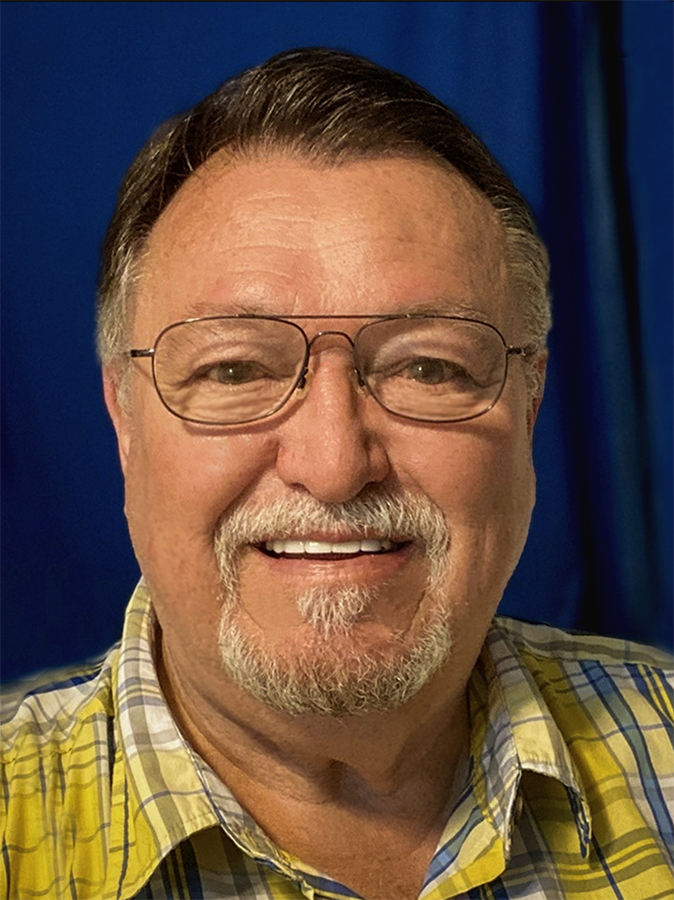
 

2023: Lokelani Lindsey attended the PCC 60th anniversary and danced in the alumni night show.

 The PCC dedication and VIP reception:  Saturday afternoon, October 12, 1963 

“The big day finally arrived. We all knew it would be a really big thing, but we also felt it would be very spiritual and that the PCC would be a missionary tool. We were told over and over, we had to be on our best behavior.” 

 President Hugh B. Brown (of the First Presidency) came from Salt Lake City to do the dedication in front of a large audience of VIPs from all over. After the program, they went on a brief tour of the villages and had dinner, but everyone was anxious to see the night show — “which went off really, really well.” 

 “Everybody did their part on the new stage [now repurposed into the Hale Aloha where the Alii Luau is served], and we all felt really good about everything,” Lokelani said.  

 Regular visitors started coming on Monday, October 14, 1963: “There had been a lot of publicity, and a lot of people came for the first month or so when all of the guest dancers were still there,” Lokelani said. 

 “Then the numbers began to fall apart, plus we had a tidal wave alert. Because I was in charge of the Hawaiian girls who worked in the theater, I was told we had to make sure everybody was safe. Then we had another tidal wave alert. It was challenging.” 

 Jack Regas choreographs the night show: Lokelani also remembers during those early days PCC leaders brought in Jack Regas, a well-known Hollywood choreographer. “In my mind, he was the one who put us all together by island groups and made sure we all understood what dances we were going to perform. I can still hear him saying, ʻYou cannot just stand in rows and do these dances. You have to have something happening so the stage looks alive.ʻ ” 

 “He had each of us doing different things in different configurations on the stage. Nothing was repetitive, and everything was exciting. He had us going through different entrances, formations, and exits. I credit him with a lot of the success of the night show.” 

Elvis Presley films at the PCC during the summer of ʻ65: That summer, popular rock-and-roll star Elvis Presley filmed part of his movie, Paradise Hawaiian Style, at the Center, which Lokelani thinks really helped open the flow of visitors. Lokelani also remembers she was assigned to accompany Elvis in the villages and at the farewell lū‘au to advise him on cultural correctness. 

 She graduated and started her educational career: Lokelani also graduated from Church College of Hawaii in June 1965 with a bachelorʻs degree magna cum laude in secondary education, and began her educational career teaching one semester at Church College of New Zealand. (She explained her family left sooner than they expected because the government would not approve a working visa for her husband.) 

 Returning to Hawaii, Lokelani served as the first-ever CCH volleyball coach,  eventually became a vice principal at Campbell High in Ewa, Baldwin High School on Maui, and also at Moloka‘i High. Along the way, she earned a masterʻs degree in 1975 in Pacific Islands Studies, Education, and Sociology from the University of Hawaii/Manoa. 

 She became principal at Kaimukī High School and then served as the Maui District Supervisor for the Hawaii State Department of Education; and she eventually even served on the board of trustees for the private Bishop Estate/Kamehameha Schools for six years before she retired after a 30-yearcareer in education. 

 Lokelani now lives in Las Vegas: After retiring from education, Lokelani moved to Las Vegas, “where I managed the 80-unit European-style Bridger Inn about three blocks up from the California Hotel on Main Street for 14 years.” 

 “Today, Iʻm fully retired. I belong to a local ukulele group that meets every Tuesday, and we sometimes entertain around town, presenting preludes to some of the shows. I also do a lot of genealogy, since I took a genealogy class from [the late] Henry Lindsey at Church College. He was my second husbandʻs second cousin.” 

 62 years since she worked at the PCC: “In the 60-plus years since I danced on the stages of the Polynesian Cultural Center, I believe for me personally, it gave me a very firm foundation of who I am and how much culture means to me.” 

 “It also made me realize that the Polynesian Cultural Center is one of the greatest missionary tools of the Church in Polynesia. It not only brings together all of our people with all of their heartfelt aloha for their islands and cultures, but it has also provided millions of visitors with a chance to glimpse the people of the Pacific in an entirely different life — one with a religious base.” 

 “The very essence of our night show, HĀ: Breath of Life, for example, influences more people to understand the strong family basis of our religion and shows them that we love what we have, not only for people of different cultures and races, but also the love we have for Jesus Christ. Itʻs beautiful.” 

 My greatest joy: “My greatest joy of being a part of that original show is the camaraderie we had among all of us,” Lokelani added. “We worked hard, we gave a lot of ourselves, and we didnʻt get paid much for it, but we also had the greatest time associating with one another.” 

 “Whenever we see each other, itʻs always with such joy and feelings of aloha, based on the fact that we were all dancers of what turned out to be a great, great show tradition that has continued all these years.” 

 — Interview by Mike (Mikaele) Foley, whose wife Sally Ann McShane Foley, started dancing with Lokelani in the original night show just a few months after the Center opened in 1963. “She and Loke have been good pals ever since, and have always greeted each other warmly. Sally loved dancing in the night show so much that she continued to do it for five years, leaving only when she and I took an extensive trip through many of the Pacific islands,” Mikaele said. 

After dancing with the CCH Polynesian Panorama group, Lokelani Lindsey became one of the original PCC night show dancers.

Facebook
Twitter
LinkedIn

Comment

Your email address will not be published. Required fields are marked *

No comments yet.