Happy Return
A forgotten $5 bill, kept for decades, carried more than monetary value. When it was quietly returned to the Polynesian Cultural Center, it revealed a promise, a love story, and a meaning far deeper than anyone expected.

A forgotten $5 bill, kept for decades, carried more than monetary value. When it was quietly returned to the Polynesian Cultural Center, it revealed a promise, a love story, and a meaning far deeper than anyone expected.

A late night, a crowded courtyard, and an unexpected poke stopped everything. What a 92-year-old grandmother whispered next—followed by a raised cane and contagious laughter—left a lesson that stayed long after the night ended.

A shy little girl. A tangled headband. One quiet moment that changed everything. What happened next—without a shared language—left everyone smiling, and revealed a simple truth about kindness you won’t expect.

In the early 1960s as a missionary in Sāmata, Savai‘i, I once joined a high chief for breakfast, served *sua pusi*—moray eel cooked in coconut milk. A guest refused to eat, noting that not even flies would land on it. Later that day, a truckload of villagers was rushed to the hospital with food poisoning from that same eel. My companion and I, protected by the Lord’s promise, felt no sickness at all. I’ve never eaten eel again.

In the early 1960s as a missionary in Sāmata, Savai‘i, I once joined a high chief for breakfast, served *sua pusi*—moray eel cooked in coconut milk. A guest refused to eat, noting that not even flies would land on it. Later that day, a truckload of villagers was rushed to the hospital with food poisoning from that same eel. My companion and I, protected by the Lord’s promise, felt no sickness at all. I’ve never eaten eel again.

Tua Hunt’s mother and father were both working at the Center when she was born . . . and she soon joined them, later returning as a student employee.

Vi’iga Fuimaono Jr. worked his way through college as a Polynesian Cultural Center’s canoe guide, and has held a number of important positions since in Samoa.
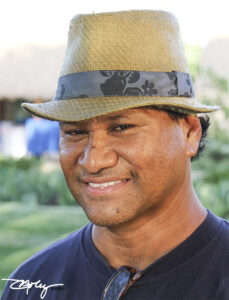
Malolo grew up in a small village on the Samoan island of Savai’i, and went to school in the capital and near Wellington, New Zealand, before attending BYU–Hawaii and working at the Polynesian Cultural Center.