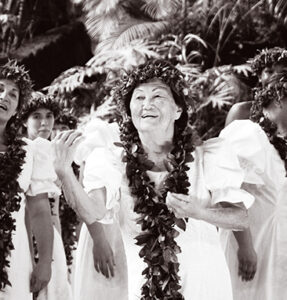
Kupuna Aunty Dora Continued Hula Tradition
Aunty Dora, who was still dancing hula in her 80s, started learn from kumu Kela Millerʻs great-grandmother as a girl in Laie.

Aunty Dora, who was still dancing hula in her 80s, started learn from kumu Kela Millerʻs great-grandmother as a girl in Laie.
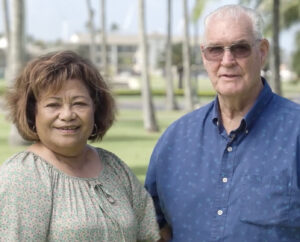
Earl Cropper’s life reflects a deep connection to Hawaiʻi, education, and service. After serving a mission in Hawaiʻi (1962–64), he enrolled at Church College of Hawaii and worked in the early days of the Polynesian Cultural Center. A former student body president, Earl built a career and family in Utah while giving back generously through the Matthew Cowley Society, believing education transforms families, communities, and future generations.
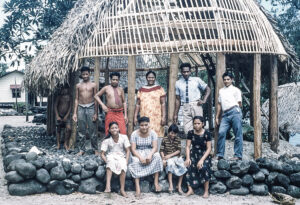
In the early 1960s, while serving in the Sāmoa Apia Mission, Elder Ron Haymore helped fulfill a unique request from the Polynesian Cultural Center—to acquire authentic ‘afa, the coconut fiber cordage traditionally used to lash wooden structures. Under Mission President John Phillip Hanks’ direction, Elder Haymore traveled across Upolu with local matai, visiting villages and gathering coils of ‘afa. His small but meaningful effort became part of the PCC’s early construction legacy, connecting craftsmanship and culture across the Pacific.
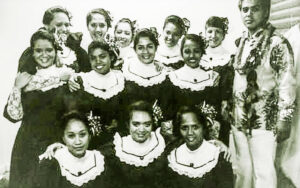
Over 200 former members of the Polynesian Cultural Center’s hālau hula, Hui Ho‘oulu Aloha, gathered in Laie on August 16, 2025, for a heartfelt reunion celebrating over 40 years of hula legacy. Founded in the early 1980s under kumu hula Cy Bridges, Keith Awai, Enoka Kaina, and “Uncle Bill” Wallace III, the group once competed at Merrie Monarch and other festivals. The reunion, filled with song, stories, and impromptu hula, honored past members and rekindled cherished bonds.
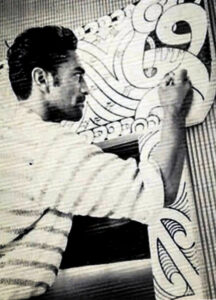
Labor missionary Percy TeHira, a New Zealand Māori who also previously served as a labor missionary in New Zealand, paints traditional kowhaiwhai designs on the window frames of the meeting house in the Polynesian Cultural Centerʻs Maori Village. in 1963. (Photo courtesy of the BYU–Hawaii Archives)
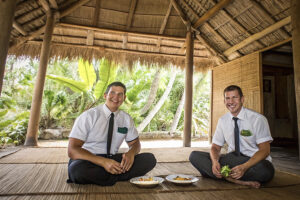
In the early 1960s as a missionary in Sāmata, Savai‘i, I once joined a high chief for breakfast, served *sua pusi*—moray eel cooked in coconut milk. A guest refused to eat, noting that not even flies would land on it. Later that day, a truckload of villagers was rushed to the hospital with food poisoning from that same eel. My companion and I, protected by the Lord’s promise, felt no sickness at all. I’ve never eaten eel again.
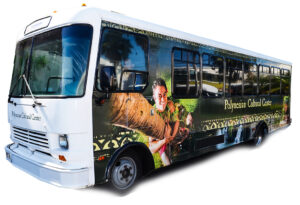
In the early 2000s, PCC reclaimed control of its transportation—and its guest experience. After decades of Waikīkī tour operators consolidating ticket sales, dictating schedules, and siphoning retail and dining, President & CEO Alfred Grace and strategist J. Alan Walker led a 2002 reset: no more consolidation, direct sales incentives, and PCC-managed charters and dispatch. Buses arrived earlier, NPS rose, margins improved, and partnerships professionalized (eventually with Roberts Hawai‘i and camera-based quality scoring). The shift remains a strategic victory for PCC.
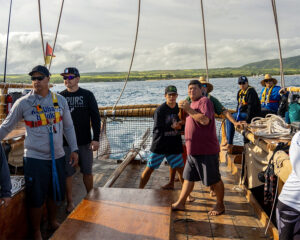
In 2024, BYU–Hawaii alumnus Mark Ellis became the Polynesian Cultural Center’s first director of voyaging experiences, leading the Iosepa on its first open-ocean journey in eight years. The 57-foot double-hulled canoe joined 26 traditional vessels at FestPAC in Kualoa, then circumnavigated O‘ahu before returning to Lā‘ie. Ellis, inspired as a boy by the Hōkūle‘a’s historic voyages, continues the renaissance of Pacific wayfinding traditions, strengthening Hawaiian identity and honoring ancestral knowledge preserved through generations of navigators.
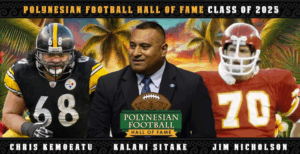
The 2025 Polynesian Football Hall of Fame Induction Ceremony at the Polynesian Cultural Center honored three remarkable figures whose achievements reflect the strength, spirit, and legacy of Polynesia. Jim Nicholson, Chris Kemoeatu, and Kalani Sitake were celebrated for their contributions to football and culture, inspiring future generations with their dedication, humility, and deep roots in the Polynesian community.